Battersea Arts Centre logo

BOX OFFICE: 020 7223 2223


Laura Palmer show page

Twin Peaks & BAC

I can remember exactly what I was doing on Tuesday 23rd October 1990 at 9pm. Twenty years ago almost to the day I sat down to watch a television programme that would change me in ways I couldn’t have imagined, altering the way I look at TV, at art, at the world. From the opening chords of Angelo Badalamenti’s soundtrack and the shots of a native bird and the smoke stacks of a timber mill, I was hooked. I had never seen anything quite like Twin Peaks

That evening BBC2 served up the start of a series that inspired artists everywhere, altered television forever and now, twenty years on, still bubbles in my sub-conscious and in the minds of a generation who watched those shows. This was like nothing that had gone before on TV. The narrative was complex and multi-layered, the characters idiosyncratic, the mood both haunting and darkly comic. It frightened me in ways I find hard to explain. It was painterly in its cinematography. The music was rich and evocative. The series blurred reality and dreams. It played out at the edges of nightmare. It suggested an American Dream turned sour – a dark vision of a community with horror at its core. Looking past the beauty of the American northwest, beyond the Douglas Firs and the local high school, behind the net curtains and the white picket fences, there was the suggestion of something hideous. Something dark and mysterious, ugly and violent.  Something that perhaps lurks within us all. 

I can never look at red velvet curtains or a picture of an owl or listen to the wind in the trees or enter a room with a ceiling fan without thinking about the world that David Lynch and his collaborators created. Twin Peaks taught me to look differently at the ordinary, to be comfortable with things that don’t quite make sense, to relish a fragmented narrative.

Yes it was only a TV show. But in many ways Twin Peaks changed my life. It taught me to read art in a different way, to be comfortable with ideas that perhaps didn’t neatly tie up, to revel in a sense of being unsettled, to explore my subconscious and the power of dreams to influence thought. And I know I’m not alone. Twenty years on and I work with dozens of artists who still refer to the influence of Twin Peaks on their practice. Either overtly or on some less conscious level, the world that Lynch created and the way he created it continue to influence theatremakers and their experiments.

So, on the 20th anniversary of the first broadcast, BAC is celebrating the ongoing influence of Twin Peaks on British theatre. We have invited artists to contribute responses to the series with works commissioned across our building. We are welcoming theatremakers, visual artists and musicians to reflect on the ongoing influence of Lynch’s work. And we plan to introduce a new generation of creative individuals to this landmark television series with a 30 hour screening of all 27 episodes in a one-off event in BAC’s Grand Hall.

Twenty years on and Twin Peaks is as fresh and rich an experience as it was when first broadcast. It is a show that operates somehow out of time – it was made in the early 1990s but looks like it might have been born in the 1950s. And because of this it is both nostalgic and utterly contemporary. It is post modern and gothic, heightened in its emotion and self-referential. The show has spoken to artists and audiences over twenty years and we hope by celebrating its influence to introduce a new generation to the world of Twin Peaks.

Twin Peaks was first broadcast in the UK on BBC2 on Tuesday 23rd October 1990 at 9pm. The first episode gained 8.15 million viewers, which was BBC2s largest ever audience.

Futures & Pasts

In May 2010 David Micklem, BAC's Joint Artistic Director, was asked to contribute to a weekend of performances and lectures at the ICA. Futures and Pasts explored the diverse pasts and possible futures of live art and performance. Curated by writer, artist and performance maker Tim Etchells this ambitious event combined marathon lecture performance with a rolling series of conversations, interviews and archival investigations alongside speculation as to the future of this vigorous and vital area of contemporary art practice. This is the text of David's contribution, imagining a possible future for performance in this country.

Download text

Last Thursday I attended the ICA where Ekow Eshun welcomed a panel of Lyn Gardner (Chair), Helen Marriage, Adrian Howells, Dries Verhoeven, Deborah Warner and myself to discuss The Epic and the Intimate. He was fastidious at welcoming LIFT and theatre in general to the ICA - no doubt still stinging from his experiences last year - it proved to be an interesting debate with great contributions from the audience.

I thought I would post the text that I gave here, in advance of BAC's One on One Festival which opens tomorrow night. As I type this first BAC blog entry the building is buzzing with thirty-five get ins happening in every nook and cranny in preparation for the festival.

Download text


One-on-One temp

Also on ONE-ON-ONE is Brian Logan's intelligent Independent on Sunday piece - look up here

The Times also did a great piece but you now have to pay for their online edition. Boo. There should also be a piece on Front Row (Radio 4) this evening at 7.15pm and check out Time Out's editorial tomorrow.

News/blog coming soon

We'll soon be launching a regularly updated blog on this page. If you've got any ideas of what you'd like us to blog about, please comment on this post. Check back soon, or sign up to the RSS feed.

Festivals

Imagine it’s Friday night. You’re exploring your options. Pub… click… film… click… club… click …show …click. You can’t decide. Maybe you opt for an evening in front of the telly with a takeaway…click. Be honest, on how many Friday nights do you do something you’ve never done before?...risk being exhilarated or bored to within an inch of your life?…experience something you might never again before you die? Now imagine another Friday night. This time you’re in a strange city and your senses are alive to difference all around you. You’re at a festival. The streets and parks and buildings are bursting with light, colour, aroma and live music. What do you choose to do? Dive in and take a risk? Or run home and switch on your computer?

When it comes to festivals, there's something in our bones that encourages us to take risks, to be more adventurous and to be playful. The diversity of the festival experience is staggering, matching the depth and breadth of human imagination. You could be cramming in eight shows a day at the Edinburgh Fringe, rolling down a Gloucestershire hill impersonating a piece of cheese or at Glastonbury with one hundred and fifty thousand other people up to your knees in mud. You could be dodging splashes of hot tar in Ottery St. Mary on bonfire night or coming over all literary at Hay-on-Wye. Just a boat journey away you could be chased through the streets of Pamplona by a bull, covered in tomatoes in Valencia or seeing shows from every corner of the globe in Avignon.

Even a single festival creates a rich variety of experience for audiences. Take last Friday. It was a warm evening at Latitude: one of the UK’s most exciting new arts festivals. Grace Jones was playing on the main stage. In a tiny cabaret tent two performers from Uninvited Guests played love dedications for audience members in a tribute to the thing that makes the world go round. A few minutes walk away another tent was crammed with hundreds of people poised in silence hanging on every word of poet Polar Bear. At a bar created entirely from scrap wood there were people discussing the visit of climate minister Ed Milliband and the forthcoming Copenhagen summit. Everywhere people were talking, eating and dancing to live music. Despite the presence of the big names from the music industry, our hunger for the unknown, the unexpected and left field is insatiable. We crave things we didn’t know we wanted: rich and diverse cultural experiences underscored by genuine ambition.

Not everything comes with a cast-iron guarantee of quality. At the Edinburgh Fringe for example, much of the work feels either desperate or derivative. Or both! Some shows are half-baked ideas, others misjudged. But sometimes you will find a gem in the most unexpected of places. An impromptu performance in the queue at the box office, a fifteen minute work-in-progress showing in the bar or a mini opera when maybe you thought you didn’t even like opera.

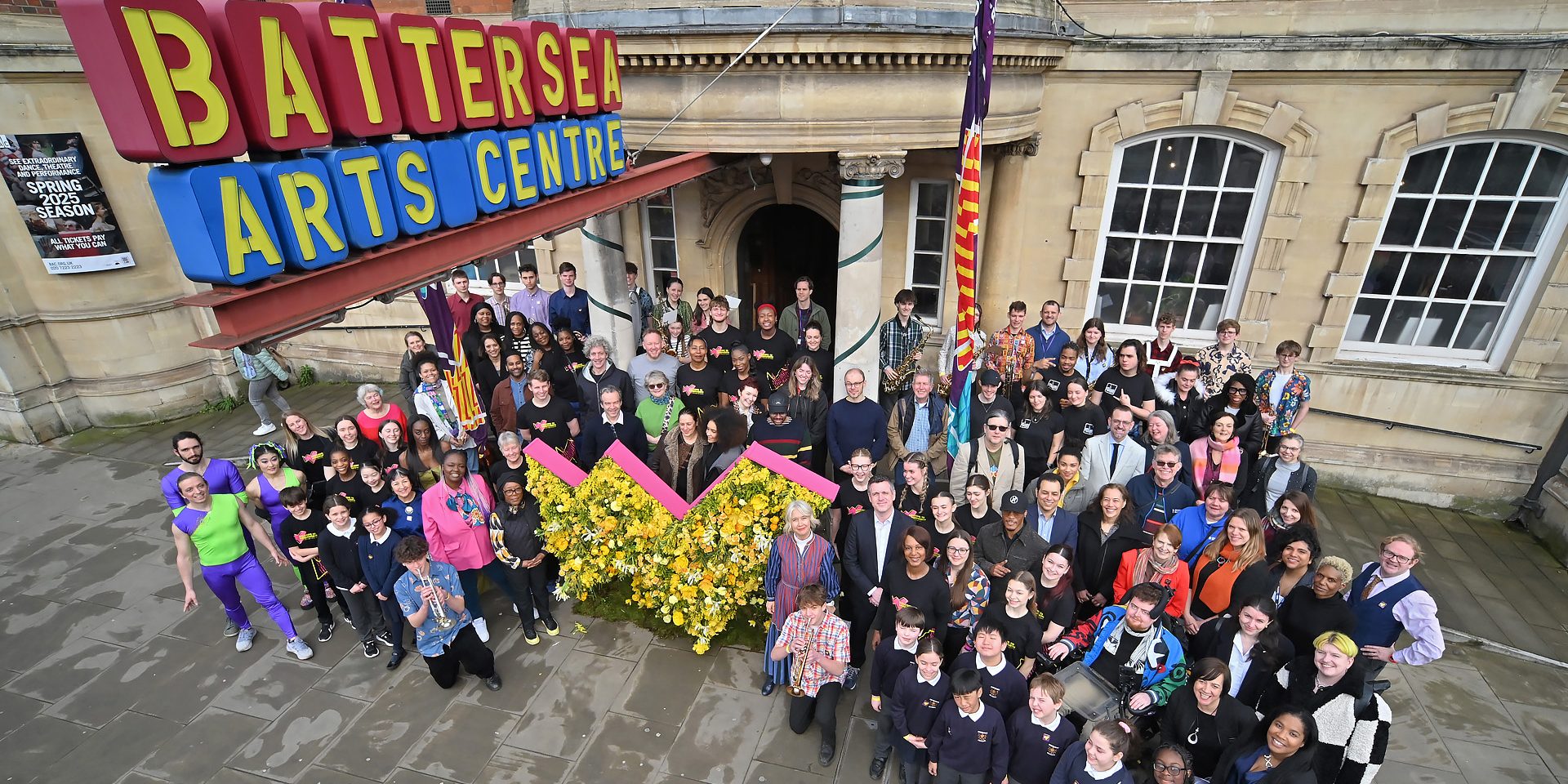
At Battersea Arts Centre we talk a lot about the festival experience. Not just as part of the festivals we programme each year, but as a central component of any visit to our Town Hall home. We aim to engender audiences every evening with the same desire to take risks, to embark on adventures and encounter the unexpected. We are on a journey towards creating a programme that offers audiences a festival experience every night across our 70-room home. We are seeking the essence of those fantastic festival experiences with evenings chock-full of new ideas, experiments and unexpected journeys. Next Friday, move beyond the click, find a festival experience, hang out and see what happens. If you don’t find something you’re looking for, then come and talk to us about your ideas for a life-changing festival experience in Battersea.

David Jubb and David Micklem (Joint Artistic Directors)

Listen to some of the music from Kneehigh's Don John, at BAC in April 2008.

BAC News is a collection of things that we find interesting, challenging and creative around the world. Check back for updates.


Search

RSS Feed


Spread The Word


Close


Categories


Authors


Tag Cloud